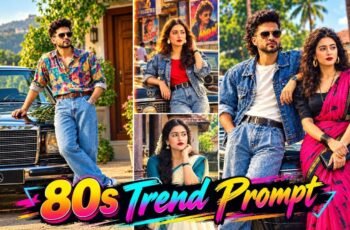
Ever wished you could tell your photos what to do instead of wrestling with complicated sliders? That’s exactly what photo edit ChatGPT lets you do. With just a few words, you can swap backgrounds, erase distractions, or even restore old family snapshots. It’s like having a pro editor in your pocket who speaks plain English and never gets tired. In this guide, you’ll learn how to harness this tool to transform your images quickly, creatively, and without needing a degree in Photoshop.
What Is Photo Edit ChatGPT?
Photo edit ChatGPT refers to using ChatGPT’s built-in image tools to change, enhance, or redesign photos using simple text commands. Instead of clicking through menus, you describe what you want—like “remove the power lines” or “make the sky sunset orange”—and the AI handles the rest. Think of it as giving directions to a very skilled artist who never misunderstands you. This feature uses advanced models like GPT Image 2 and ChatGPT Images 2.5 to deliver sharp, realistic edits in seconds.
How to Get Started with Photo Editing in ChatGPT
Starting is as easy as sending a message. First, open ChatGPT and either upload a photo or generate one using a prompt. Once your image appears, click on it to enter edit mode. You’ll see tools like Select, Erase, and Remove BG. Use the Select brush to highlight the area you want to change, then type your instruction in the chat box. For example, “Change this shirt to red, keep everything else the same.” Hit send, and watch your photo transform before your eyes.
Key Features That Make Photo Edit ChatGPT Shine
ChatGPT’s image editor packs several smart features. You can point directly at parts of an image and leave comments for precise edits. The Remove BG tool instantly deletes backgrounds, perfect for product photos or profile pics. There’s also an Erase function to clean up blemishes or unwanted objects. Plus, with version 2.5, edits stay consistent even after multiple changes—no more accidental undoing of earlier fixes. It’s like having a magic eraser that remembers what you’ve already done.
Best Prompts for Stunning Photo Edits
The right words make all the difference. Try prompts like “Swap the background to a beach at golden hour, keep the person unchanged” or “Remove the trash can from the corner, blend the grass naturally.” For portraits, use “Smooth skin slightly, keep texture natural, brighten eyes.” Want to restore old photos? Say “Fix scratches and faded colors, restore original tones without over-saturating.” These clear, specific instructions help the AI understand exactly what you’re after.
When to Use Photo Edit ChatGPT vs. Traditional Apps
ChatGPT shines for quick, creative edits where speed and simplicity matter. It’s great for social media posts, meme tweaks, or fixing small flaws. But if you need pixel-perfect control—like adjusting individual color curves or working with layers—apps like Lightroom or Photoshop still win. Think of ChatGPT as your go-to for 80% of everyday edits, and traditional apps for the remaining 20% that demand surgical precision. You get the best of both worlds without burning out.
Tips to Avoid Common Editing Mistakes
Even AI can overdo it if you’re not careful. Always zoom in to check edges after an edit—sometimes changes bleed past the brushed area. If something looks off, don’t redo the whole prompt. Instead, give a small correction like “Restore the original hairline, keep the new background.” Also, specify what to keep unchanged: “Keep face, pose, and lighting the same.” This prevents the AI from accidentally altering parts you love. Iteration is your friend—tweak one thing at a time.
Real-World Uses for Photo Edit ChatGPT
This tool isn’t just for fun—it’s practical too. Online sellers can swap messy room backgrounds for clean white ones. Bloggers can create custom thumbnails without hiring designers. Families can restore and colorize old black-and-white photos. Even real estate agents can enhance property pics by brightening rooms or removing clutter. The possibilities stretch as far as your imagination—and your prompts—can reach. It’s a Swiss Army knife for visual content creators.
Future of AI Photo Editing: What’s Next?
AI photo editing is evolving fast. With each update, models understand context better, handle complex requests, and preserve details more faithfully. Soon, you might sketch a rough idea and have ChatGPT turn it into a polished image or describe a mood and get a fully styled photo back. The line between “editing” and “creating” will blur even more. For now, mastering today’s tools gives you a head start. Stay curious, keep experimenting, and let AI amplify your creativity not replace it.

Create a minimalist hand-drawn paper-cover illustration from the original photo, preserving the recognizable subject, pose, proportions, and key objects. Place the entire subject exactly in the visual center of the canvas — centered both horizontally and vertically, around the 50% x 50% position. Do not place the subject near the bottom, lower third, or lower half. Keep equal negative space above and below the subject. Keep the subject relatively small, occupying only about 30–40% of the overall canvas, while maintaining a perfectly balanced centered composition. Use simple imperfect lines, flat acrylic-style shapes, rough paper texture, handmade brush marks, and organic edges. Use a warm off-white paper background with lots of clean negative space. Use only up to 4 muted colors extracted from the original photo. Quiet, poetic, refined editorial art-book style. Minimal typography only if it naturally fits. Strictly prioritize centered composition and vertical balance. Include stylish handwritten typography at the person bottom with the name “Anupama” black colour text with red love symbol
Some people stay in our hearts. Cinematic artistic shot of a young man seen from behind, wearing a black shirt and blue jeans, looking up at a large mural painted on a distressed grey wall. The mural depicts a close-up portrait of an Indian woman same face upload image face match 100%, smile face, in traditional attire with a bindi, nose ring, and saree,happy looking, romantic eyes Surreal, moody atmosphere, textured wall, dramatic lighting, photorealistic, aspect ratio. –AR 4:6